


In a world filled with distractions, truly listening can feel like a lost art. However, mastering the six essential listening skills can transform your interactions, enabling you to build trust and understanding with others instantly. Active listening not only fosters deeper connections but also enhances your ability to empathize, making conversations more meaningful and productive.
Imagine being able to diffuse conflicts, resolve misunderstandings, and create an atmosphere of openness simply by honing your listening abilities. Whether in personal relationships or professional environments, effective listening is the key to facilitating better communication and collaboration.
As you delve into this article, you’ll discover practical techniques and real-world scenarios that will empower you to enhance your listening skills. Each step you take will bring you closer to becoming a more engaged communicator, equipped to navigate any conversation with confidence and clarity. Are you ready to unlock the power of listening? Let’s explore together!
Understanding the Importance of Listening Skills
Listening is not merely an act of hearing; it is an essential skill that fosters deeper relationships, minimizes misunderstandings, and encourages open communication. When you actively engage in listening, you demonstrate respect and appreciation for the speaker, creating a safe environment that promotes trust and collaboration. According to research, effective listening can enhance both personal and professional interactions, empowering individuals to express themselves more freely and honestly.
To illustrate the paramount importance of listening skills, consider a workplace scenario where a team member feels overlooked. When discussions are led by a few dominant voices, the less assertive team members may withhold their ideas and potential contributions, stifling creativity and innovation. In contrast, a leader who practices attentive listening invites diverse perspectives, making every team member feel valued. This inclusive approach not only enriches decision-making but also instills a sense of belonging among team members, fostering a culture of collaboration.
Moreover, listening goes beyond verbal exchanges; it encompasses understanding non-verbal cues and emotional tones. By honing your listening skills, you can respond more effectively to others’ needs, boosting emotional intelligence in both personal and professional settings. All individuals, from parents to professionals, can enhance their communication by focusing on active listening techniques such as summarizing the speaker’s points, asking clarifying questions, and providing thoughtful feedback. With practice, these skills will not only improve interactions but will establish a foundation for trust and understanding, empowering you to connect with others more meaningfully.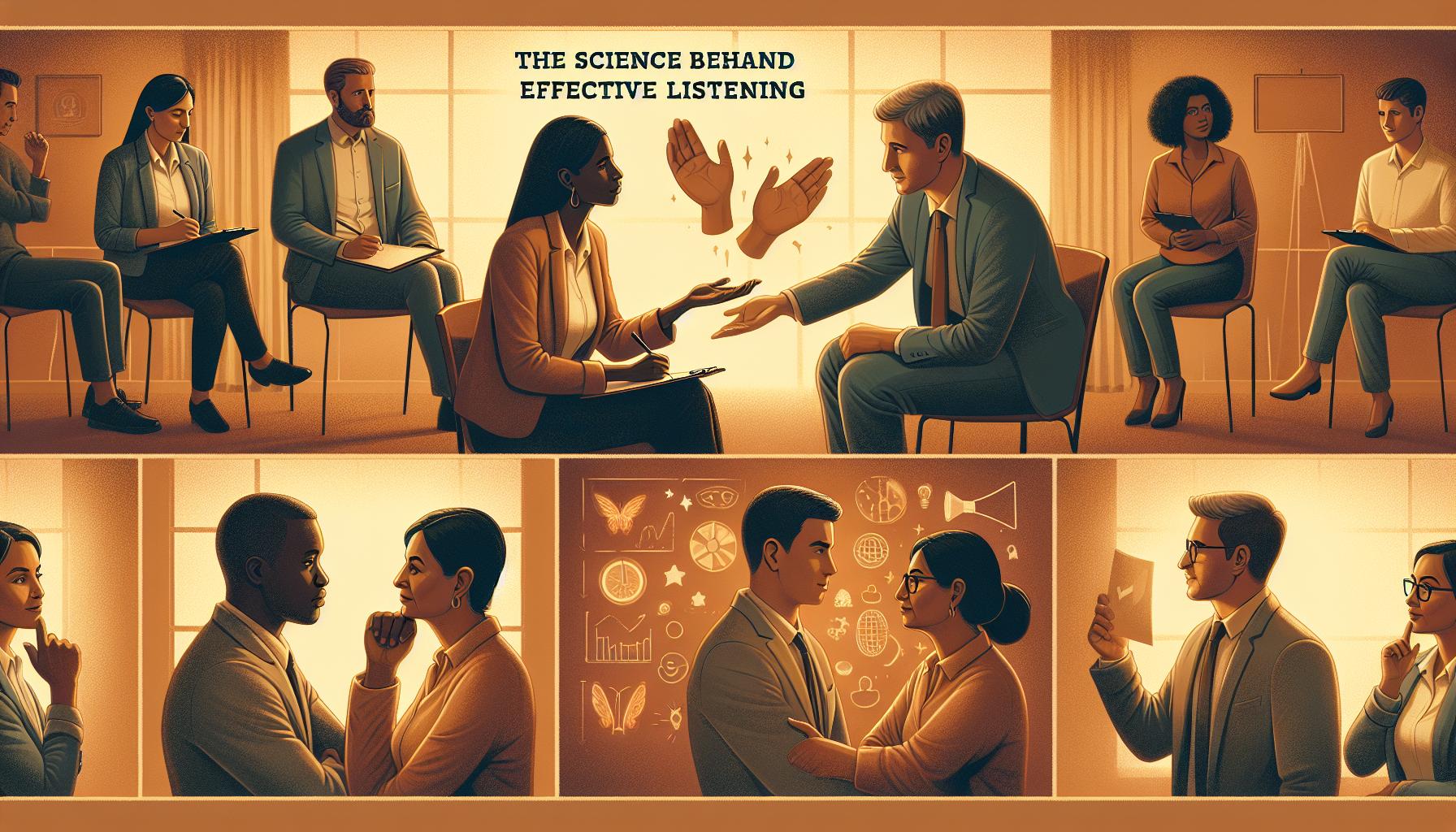
The Science Behind Effective Listening
Effective listening is more than just a passive act; it’s a complex cognitive and emotional process that plays a pivotal role in communication. Research suggests that active listening activates multiple areas of the brain, enhancing our ability to absorb information and understand emotions. When we listen attentively, we engage in deeper processing, allowing for a richer comprehension of both verbal and non-verbal cues. This understanding fosters empathy, as we can better appreciate the perspectives and feelings of others.
To truly benefit from effective listening, it is essential to focus on two key aspects: attention and response. Giving someone your undivided attention not only signals that you value their input but also helps you to track their narrative effectively. Techniques such as nodding, maintaining eye contact, and verbal affirmations like “I see” or “go on” can significantly improve your engagement level. Furthermore, effective responders utilize paraphrasing-restating what the speaker has said-to confirm their understanding and show that they are invested in the conversation. This two-way exchange strengthens trust and encourages open dialogue.
Another interesting facet of effective listening is its impact on relational dynamics. When individuals feel heard, they are more likely to engage openly and share their thoughts freely. For instance, in a workplace setting, a manager who actively listens to employee concerns fosters a culture of collaboration and innovation. Employees who perceive that their voices matter are more inclined to contribute ideas, leading to enhanced group cohesion and creativity. Ultimately, mastering can transform communication from a mere exchange of words into a powerful tool for connection and understanding.
By honing this skill through practice and mindfulness, individuals across all walks of life can enhance their interpersonal interactions. Whether you’re a parent engaging with a child, a student collaborating on projects, or a professional leading a team, effective listening lays the groundwork for successful communication and mutual respect. As you incorporate these techniques into your daily interactions, you’ll find that relationships deepen and misunderstandings diminish, enriching both your personal and professional life.
Key Components of Active Listening
Active listening is a foundational skill that goes beyond merely hearing words; it requires engaging fully with the speaker both mentally and emotionally. One of the is the concept of focus. This means being present in the moment and minimizing distractions around you. By putting away your phone and making a conscious effort to concentrate on the speaker, you signal your commitment to what they are saying. Consider this scenario: in a meeting, if someone speaks while others are checking their devices, the speaker feels undervalued. Contrast that with a setting where everyone is engaged, eyes on the speaker, and responsive body language is present. This not only enhances understanding but also builds rapport.
Another critical aspect is reflective listening, which involves paraphrasing what the speaker has said to confirm understanding. This technique does wonders in clarifying messages and ensuring that both parties are on the same page. For instance, replying with, “So what you’re saying is…” demonstrates that you’re processing the information, inviting deeper exploration of the topic. It’s essential for preventing misunderstandings, especially in emotionally charged conversations.
Empathy also plays a crucial role in effective active listening. This means not only understanding the words but also grasping the emotions behind them. To cultivate empathy, try asking open-ended questions that encourage the speaker to share more about their feelings. For example, saying, “Can you tell me more about how that made you feel?” allows for a more profound connection and shows you care about their perspective.
Finally, body language is an integral component of active listening. Non-verbal cues such as nodding, maintaining eye contact, and leaning slightly forward convey attentiveness and engagement. These actions reinforce to the speaker that they have your full attention, creating a supportive environment conducive to open dialogue. Recognizing the synergy between these components can significantly enhance your listening skills, ultimately fostering stronger relationships and greater understanding in all areas of life.
Incorporating these techniques into your daily interactions can transform conversations, making them not only more enjoyable but also deeply fulfilling. Practice consistently, whether in personal or professional settings, and watch as your connections deepen and your communication skills flourish.
How to Build Trust Through Listening
Building trust between individuals starts with effective listening. When you approach conversations with genuine attention and openness, you create an environment where the speaker feels valued and understood. This trust is foundational; it encourages honest dialogue and can lead to deeper connections, whether in personal relationships, professional settings, or community interactions. To foster this trust, consider the following strategies:
- Be Present: Eliminate distractions when listening. Put away devices and focus entirely on the speaker. This act alone shows that you prioritize their words and feelings.
- Practice Reflective Listening: Acknowledge and paraphrase what the speaker has said. For instance, saying, “What I hear you saying is…” can affirm that you are engaged and care about their perspective.
- Show Empathy: Listen not just for content, but for emotional undertones. Ask open-ended questions like, “How did that make you feel?” to encourage them to express deeper feelings.
- Be Consistent: Trust builds over time. Aim to be reliable in your listening habits. Consistent attention will solidify the speaker’s confidence in your support.
The impact of non-verbal cues cannot be overstated. Maintain eye contact and exhibit attentive body language, such as nodding and leaning slightly forward. This non-verbal engagement complements what you say verbally, reinforcing that you are fully invested in the conversation. Research shows that when people feel heard, they are more likely to open up, which leads to stronger relational ties.
In high-stakes conversations, such as during conflict resolution, the ability to listen actively can transform the dynamic. For instance, when disagreements arise, focusing on listening can de-escalate tension. Responding with phrases like, “I see this is important to you,” shows that you respect their viewpoint and wish to understand rather than argue. These techniques collectively nurture an atmosphere of trust and respect, allowing relationships to flourish. Practice these approaches consistently, and you’ll find conversations become not only more meaningful but also a catalyst for stronger connections.
Techniques to Enhance Empathy in Communication
Effective communication is as much about understanding others as it is about expressing oneself. To enhance empathy in communication, engage actively with the speaker’s emotional experience, transforming the conversation into a deeper connection. Start by practicing active listening, which involves being fully present and attentive. This means not only hearing the words spoken but also observing tone and body language. Repeat back key points and feelings expressed by the speaker to show that you truly understand their perspective. For example, if someone shares a challenging experience, you might respond with, “It sounds like you felt really overwhelmed during that situation,” which validates their emotions.
Utilizing open-ended questions is another powerful technique to foster empathy. Instead of asking yes/no questions, encourage the speaker to share more about their feelings by prompting them with questions like, “What was going through your mind?” or “How did that affect you?” This invites deeper reflection and allows the speaker to articulate their thoughts more fully. Additionally, consider creating a safe environment for dialogue by minimizing distractions and being responsive. Maintaining eye contact and using encouraging body language, such as nodding, communicates that you value what the speaker is saying.
To further cultivate empathetic communication, incorporate non-verbal cues that reflect understanding and openness. Your facial expressions, posture, and gestures can significantly impact how your message is received. For instance, leaning slightly forward while the other person speaks conveys interest and engagement, making them feel more comfortable sharing their feelings. Moreover, practicing self-awareness about your own emotions and biases can help you steer clear of reactions that could hinder empathy. Encourage yourself to pause and reflect before responding, allowing space for thoughtful communication that centers around the other person’s experience.
Incorporating these techniques into your everyday interactions can not only enhance your empathy but also strengthen your connections with others. Empathy in communication builds trust and fosters understanding, creating relationships where both parties feel heard and valued. By committing to practice these strategies, you cultivate an atmosphere of compassion that can vastly improve both personal and professional relationships.
Practical Exercises to Develop Listening Skills
To truly enhance your listening skills, engaging in targeted exercises can make a significant difference. One effective approach is the mirroring technique, where you repeat back what the speaker has said, not just the words but their feelings and intentions. For instance, after a colleague explains a challenging project, you might say, “It sounds like you’re feeling frustrated because of the tight deadlines.” This method not only reinforces understanding but also fosters an environment where the speaker feels validated and heard.
Another powerful practice involves active summarization. After a conversation, take a moment to summarize the key points discussed. You might jot down notes or verbally recap the conversation with the speaker, focusing on their main concerns and insights. This reinforces your engagement and demonstrates that you value their input. For example, in a meeting, you could conclude with, “So what I understand is that we need to prioritize the budget review before moving forward. Is that right?” This not only checks for accuracy but also shows respect for the speaker’s contributions.
Integrating role-play scenarios can also enhance your listening skills. Pair up with a friend or colleague and take turns sharing personal experiences. While one speaks, the other listens intently and practices various listening techniques, such as asking clarifying questions or providing empathetic responses. Afterward, swap roles. Consider using a set of prompts to guide the conversation, which can help in practicing how to navigate different emotional tones and topics.
Lastly, dedicating time to mindfulness exercises can improve your overall concentration and presence during conversations. Simple practices like focused breathing or meditation can help reduce distractions and enhance your ability to stay engaged. As you cultivate these habits, you will likely find that your listening skills improve, leading to more meaningful interactions and a stronger sense of connection with those around you.
Through these exercises, you not only develop your listening abilities but also build a foundation for deeper, more trusting relationships with colleagues, friends, and family. Embrace the opportunity to grow in this essential skill, knowing that each practice session brings you closer to more effective and empathetic communication.
Overcoming Barriers to Effective Listening
To enhance your listening capabilities, it’s crucial to identify and address barriers that may hinder effective communication. One major barrier is distractions, which can stem from the environment or internal thoughts. To combat this, practice active mindfulness: focus on the speaker’s words and maintain eye contact. Try to eliminate external distractions by finding a quiet setting, and mentally note any internal distractions that arise, allowing them to pass without dwelling on them.
Another common obstacle is emotional reactions. When a topic hits home, feelings like frustration or defensiveness can cloud our ability to listen. Acknowledging these emotions is key. Instead of reacting immediately, take a breath and remind yourself of the importance of understanding the speaker’s perspective. Using phrases such as “I see where you’re coming from” can help lower defensiveness, fostering a more open dialogue.
Practical Techniques to Overcome Barriers
- Practice Reflective Listening: After the speaker has finished, paraphrase what they said. This not only shows you were listening but also clarifies any misunderstandings.
- Set Listening Goals: Define specific goals before conversations, such as “I will focus on understanding their viewpoint” or “I will practice not interrupting.”
- Use Nonverbal Cues: Nodding or maintaining open body language can encourage the speaker while signaling your attentiveness.
Moreover, fear of judgment can prevent active listening. It’s important to cultivate a non-judgmental attitude, reminding yourself that everyone has unique experiences. Encourage open conversation by stating, “I’m here to listen without judgment.” This reassurance can alleviate the speaker’s anxiety, fostering a deeper connection.
Ultimately, requires intentionality and practice. By implementing these techniques, you elevate your ability to engage meaningfully, allowing for richer conversations and stronger relationships. Each interaction poses an opportunity to refine your skills, so embrace the journey toward becoming a more effective listener.
Listening Styles: Finding What Works for You
Different people approach listening in various ways, which can significantly impact the effectiveness of communication. Understanding your unique listening style is essential in enhancing your ability to connect and build trust with others. There are generally four key listening styles: analytical, relational, tactical, and critical. Each style has its strengths and can be applied differently according to the context of the conversation.
Analyzing Your Listening Style
- Analytical Listeners: These individuals focus on data and facts. They prefer detailed information and appreciate structure in communication. To engage them, be clear and precise, often providing supporting evidence.
- Relational Listeners: Primarily concerned with feelings and relationships, these listeners gravitate towards empathetic responses. They thrive in conversations that allow emotional connection, so share personal anecdotes and validate their feelings.
- Tactical Listeners: These listeners are practical and often focus on the actionable components of communication. They require clarity on instructions or steps to take. Ensure that your points are straightforward and provide tangible takeaways.
- Critical Listeners: Approaching conversations with skepticism, critical listeners analyze the information before forming their opinions. They appreciate a well-structured argument and seek to identify flaws in reasoning. Present your ideas logically and anticipate counterarguments.
Identifying your style lets you tailor your listening approach based on the speaker’s needs, fostering a richer dialogue. You can experiment with various listening styles to see which resonates best with different individuals. For example, in a professional setting, adopting an analytical style might be more beneficial when discussing project details, while a relational approach can be nurturing in situations involving personal issues.
Enhancing Your Listening Skills
To further develop your listening style, try integrating aspects from each style into your interactions. Practice active listening techniques, such as paraphrasing to clarify understanding, and maintaining open body language, which can encourage a more honest exchange. Additionally, strive for emotional intelligence by noticing how your responses affect the listener, adapting your approach accordingly.
Ultimately, embracing various listening styles not only enhances your communication skills, but it also empowers you to establish deeper connections with others. By continually practicing and refining your listening abilities, you create an engaging environment that fosters trust, understanding, and collaboration.
The Role of Non-Verbal Cues in Listening
Non-verbal cues play a crucial role in effective listening, often speaking volumes beyond the actual words exchanged. Understanding body language, facial expressions, and eye contact can significantly enhance your ability to engage with others and foster a trustworthy atmosphere. For instance, studies suggest that up to 93% of communication is non-verbal, highlighting the necessity of being aware of your own body language as well as that of the speaker. When you maintain appropriate eye contact, nod in acknowledgment, and mirror the speaker’s expressions, you demonstrate engagement and validation, which encourages a deeper connection.
To effectively harness non-verbal cues, consider the following aspects of body language in your interactions:
- Eye Contact: Maintain appropriate eye contact to show attentiveness; too little can signal disinterest, while too much may be perceived as aggressive.
- Posture: Adopt an open posture, facing the speaker with your arms uncrossed to convey receptiveness and eagerness to listen.
- Facial Expressions: Use facial expressions that reflect empathy and understanding-smiling when appropriate can convey warmth, while nodding indicates comprehension.
- Gestures: Simple gestures, like leaning slightly forward, can show that you are invested in the conversation.
In addition to interpreting cues from others, it’s vital to become aware of your own non-verbal signals. Regularly check-in with yourself during conversations to ensure that your body language aligns with your verbal messages. For example, if someone shares a troubling experience, crossing your arms or checking your phone could unintentionally minimize their feelings and shut down communication. By consciously attuning to both verbal and non-verbal elements, you can create an engaging dialogue that fosters trust and understanding.
Practicing these techniques not only improves your listening skills but also empowers you to cultivate a more genuine and supportive communication style. As you enhance your awareness of non-verbal cues, you will likely notice an increase in your relationships’ depth and quality, allowing for more effective and meaningful conversations.
How to Give Constructive Feedback While Listening
In any conversation, providing constructive feedback while actively listening can foster a more open and trusting environment. Effective feedback is not just about what you say; it also involves how attentively you listen to others. When you show that you value their input, it makes it easier for them to accept your feedback. Start by establishing a connection with the speaker. Use positive reinforcement to acknowledge their effort and feelings, creating an atmosphere where they feel safe to express themselves.
When giving feedback, consider using the “sandwich approach.” Begin with a compliment, followed by your constructive critique, and end on a positive note. This technique helps soften the impact of criticism and reinforces the speaker’s self-esteem. For example: “I really appreciated your detailed analysis in the presentation; however, I think incorporating more visual aids could enhance engagement. Overall, your passion for the topic really shines through!” This method encourages openness and demonstrates that you’re engaged in the conversation.
Active listening skills play a significant role here. Make sure to ask open-ended questions during feedback sessions, allowing the other person to reflect and contribute their thoughts. For instance, after providing your feedback, you might ask, “How do you feel about the ideas I shared?” This not only invites dialogue but also shows that you value their perspective. Additionally, it’s critical to practice reflective listening-paraphrasing what the speaker has said to ensure clarity and show understanding.
Lastly, never underestimate the power of non-verbal cues, such as maintaining eye contact and using affirmative body language, to signal your engagement. By integrating these techniques, you promote a culture of collaboration and understanding, turning feedback into a valuable part of your communication toolkit.
Listening in Conflict Resolution: Strategies for Success
In the heat of conflict, the ability to listen effectively can transform a tense situation into a constructive dialogue. When parties prioritize listening, they create an environment that fosters understanding and collaboration. One of the most vital steps in conflict resolution is to *actively listen*, which requires fully concentrating on what is being said rather than formulating your response while the other person is speaking. This level of focus can diffuse escalating emotions and show that you value the other person’s perspective, thereby reducing defensiveness.
Here are some practical approaches to enhance your listening skills during conflicts:
- Practice reflective listening: Summarize what the other person has said to confirm your understanding. For example, “So what I hear you saying is that you felt unheard during the meeting. Is that correct?” This technique not only clarifies the message but also demonstrates respect.
- Ask open-ended questions: Encourage deeper discussion by asking questions that require more than a yes or no answer. Questions like “What led you to feel this way?” can uncover underlying issues and promote a more comprehensive dialogue.
- Manage your emotions: Stay calm and mindful of your own feelings. If you feel overwhelmed, take a deep breath or suggest a short break to collect your thoughts, which can help maintain a constructive atmosphere.
- Validate feelings: Acknowledge the other person’s emotions without judgment. Phrases such as “I can understand why you would feel that way” can create an atmosphere of empathy, allowing for a more open exchange.
By implementing these strategies, you not only enhance your own listening abilities but also contribute to creating a more peaceful and effective resolution process. As communication becomes more collaborative, trust builds, and the feedback loop between parties strengthens. Remember, listening isn’t just about hearing words; it’s about opening a channel for genuine connection and resolution.
Maintaining Engagement in Conversations Through Listening
Engaging fully in conversations is essential not only for effective communication but also for cultivating relationships built on trust and understanding. One powerful way to maintain engagement is by actively listening, demonstrating that you value the speaker’s thoughts and feelings. This active participation can transform mundane exchanges into meaningful dialogues, making the other person feel heard and respected.
To enhance engagement, consider utilizing these techniques:
- Mirror body language: Subtly adopting similar postures or gestures can create a sense of rapport and signal that you are invested in the conversation.
- Use verbal acknowledgments: Small verbal cues like “I see,” “Interesting,” or “Go on,” can encourage the speaker to continue sharing, showing that you are both present and interested.
- Summarize key points: Periodically summarizing what has been discussed helps reinforce understanding and keeps the conversation focused. Saying something like, “What I’m hearing is…” not only clarifies the message but also validates the speaker’s contributions.
- Maintain eye contact: This non-verbal gesture conveys your attention and respect, making the other person feel valued. It’s essential, especially in face-to-face interactions, to sustain eye contact without staring, which can be intrusive.
These strategies foster an environment where open dialogue can thrive. When individuals feel truly engaged, they are more likely to express their thoughts candidly and contribute to a richer conversation. By continuously refining your listening skills, you create opportunities for deeper connections, promoting mutual understanding and respect that last beyond a single interaction.
Faq
Q: What are the key benefits of developing listening skills?
A: Developing listening skills enhances communication, fosters trust, and improves relationships. When individuals actively listen, they show empathy and understanding, which can reduce misunderstandings and enhance collaboration. For deeper insights, refer to the section on “Understanding the Importance of Listening Skills” in the article.
Q: How can non-verbal cues improve listening skills?
A: Non-verbal cues, such as eye contact and body language, significantly enhance listening by conveying attention and engagement. By being aware of and responding to these cues, listeners can better understand the speaker’s emotions and intentions. Explore more on this in “The Role of Non-Verbal Cues in Listening.”
Q: What is the relationship between listening skills and conflict resolution?
A: Strong listening skills are crucial in conflict resolution, as they allow parties to fully understand each other’s perspectives. This understanding can lead to more effective solutions and reduce tension. For strategies on utilizing listening in conflict situations, see the section “Listening in Conflict Resolution: Strategies for Success.”
Q: How do different listening styles affect communication?
A: Different listening styles, such as analytical, relational, and critical listening, affect how individuals process messages and respond. Knowing your style can help you adapt to others’ preferences and improve overall communication effectiveness. Learn more in “Listening Styles: Finding What Works for You.”
Q: What practical exercises can help improve listening skills?
A: Practical exercises such as summarizing what the speaker says, practicing mindfulness, and engaging in role-plays can significantly enhance listening skills. These techniques promote active engagement and understanding. Check out “Practical Exercises to Develop Listening Skills” for more activities.
Q: Why is empathy an essential component of listening skills?
A: Empathy enables listeners to connect with speakers on an emotional level, making them feel understood and valued. This connection can foster deeper discussions and strengthen relationships, as outlined in “Techniques to Enhance Empathy in Communication.”
Q: How can feedback be effectively incorporated while listening?
A: Effective feedback involves summarizing or paraphrasing the speaker’s message to ensure understanding and affirm their feelings. This technique not only validates the speaker but also fosters clearer communication. For more on this, see “How to Give Constructive Feedback While Listening.”
Q: What are common barriers to effective listening and how can they be overcome?
A: Common barriers include distractions, preconceived notions, and emotional reactions. Overcoming these involves active engagement, maintaining an open mind, and practicing focused listening. Discover more strategies in “Overcoming Barriers to Effective Listening.”
Future Outlook
By mastering these six listening skills, you’ve taken a crucial step toward building trust and understanding in your interactions. Remember, the key to impactful communication lies in your ability to truly listen and respond with empathy. Don’t let this knowledge just sit-practice these techniques in your daily conversations to see immediate results.
If you’re eager to expand your communication toolkit further, check out our articles on effective communication strategies and ways to improve emotional intelligence. For ongoing tips and insights, consider signing up for our newsletter or exploring our coaching services tailored to enhancing personal and professional relationships.
Engage with us in the comments below-share your experiences or any challenges you face while practicing these skills. Your journey to becoming a better listener can inspire others, fostering an even richer learning environment. Keep the conversation going and watch how your efforts transform your relationships!
Get our latest guides, news, and insights highlighted in your Google Search & AI Overviews.


